When to Start PDRN Treatments for Anti-Aging and Skin Rejuvenation

With regenerative aesthetics taking off around the world, PDRN treatments for skin quality, hydration, elasticity, and overall skin health are being introduced to more and more people. PDRN (Polydeoxyribonucleotide) was originally developed for tissue repair and wound healing. But it has become one of the most popular and valuable ingredients in modern aesthetic medicine, especially in South Korea, where regenerative skin procedures are a significant part of preventive anti-aging therapy.
One of the most common questions patients ask is, "When should I start PDRN treatments?"
PDRN is formulated to help the skin’s natural repair and regeneration, instead of treating signs of aging later on. As such, the ideal age to begin treatment may not be similar to other aesthetic procedures such as dermal fillers or neurotoxins. The answer is not a specific number. The start time for PDRN is determined by your skin condition, lifestyle and environmental exposures, and long-term aesthetic goals.
In this guide, we'll explore how skin changes throughout different stages of life, when PDRN may be beneficial, and why many aesthetic experts consider regenerative treatments an important part of modern anti-aging strategies.
How Does PDRN Work On The Skin?

Before discussing when to start PDRN treatments, it's important to understand what PDRN actually does. PDRN stands for Polydeoxyribonucleotide, a DNA-derived ingredient commonly extracted from highly purified salmon DNA. Unlike treatments that focus solely on reducing wrinkles or restoring lost volume, PDRN helps support tissue repair, cellular regeneration, collagen production, improved skin elasticity, enhanced hydration, and skin barrier recovery.
PDRN works at a biological level by supporting the skin's natural healing mechanisms. This means it can be used not only to address existing skin concerns but also to help maintain healthy skin before significant aging occurs. Additionally, when the skin ages over time, the collagen and elastin fibers significantly decrease, leading to various skin conditions, including sagging skin, facial wrinkles, and even dark spots, creating dull and unpleasant features. With PDRN injections, collagen and elastin production is triggered gradually throughout the course of the treatment, reducing the appearance of early signs of aging and ultimately creating youthful results.
Why Aging Starts Earlier Than Most People Think

Many people associate aging with visible wrinkles, sagging skin, and volume loss. Sometimes these are the telltale signs of aging However, biological aging begins long before these signs become noticeable. Research shows that collagen production gradually declines beginning in the mid-to-late twenties. In fact, adults may lose approximately 1% of their collagen production each year after their twenties.
Other age-related changes include:
Reduced skin hydration
Slower cellular turnover
Increased oxidative stress
Declining elasticity
Reduced repair capacity
These changes occur beneath the surface long before they become visible. This is one reason preventive skincare and regenerative treatments have become increasingly popular among younger adults.
The Shift Toward Preventive Aesthetics
The modern aesthetic industry is increasingly focused on prevention rather than correction. Instead of waiting until wrinkles become deeply etched or skin laxity becomes significant, many patients now seek treatments that help preserve skin quality earlier in life.
This approach has become especially common in South Korea, where maintaining healthy skin is often viewed as more important than treating advanced signs of aging later. PDRN aligns perfectly with this preventive philosophy because it supports the skin's natural regenerative abilities. Rather than dramatically altering appearance, it helps maintain healthier skin over time.
PDRN in Your 20s
Is It Too Early?

The question that comes to mind is if it is too early to start PDRN treatment. But one of the biggest misconceptions about regenerative treatments is that they are only suitable for older individuals. In reality, many patients begin PDRN treatments in their twenties. This doesn't necessarily mean they are treating aging. Instead, they may be addressing concerns such as acne scars, dull skin, dehydration, uneven skin texture, and environmental damage.
PDRN can also help support skin recovery following procedures via other skincare treatments like microneedling, laser treatments, and chemical peels. The best type of PDRN-based products that works well with individuals in their 20s is in topical form, such as creams and serums, due to the skin’s strong ability to fully absorb and metabolize the problems. Although skin-boosting injectables are a great addition for quicker effects, the goal is for long-term skin health; thus, topical PDRN-based products are the most ideal as a starter towards anti-aging results.
Benefits of Starting in Your 20s
Patients in their twenties may experience:
Improved skin radiance
Better hydration
Enhanced skin barrier function
Faster skin recovery
Long-term skin maintenance
For individuals focused on prevention and skin quality, the late twenties can be an excellent time to introduce regenerative treatments. It is also important that it is not the amount of skincare products you apply to your skin that can have the most effective results, but choosing the right products according to your skin condition and after a complete evaluation by a medical doctor is the most ideal pathway toward long-term skin health and youthful features. Learn more about how a consultation goes before PDRN treatments are performed in our comprehensive treatment guide.
PDRN in Your 30s
The Most Popular Starting Point

For many patients, the thirties are the ideal decade to begin PDRN treatments. This is often when the first visible signs of aging begin to appear. Common concerns include several signs of aging, from fine lines, mild loss of elasticity, and dullness to uneven skin tone and reduced firmness. Because collagen decline becomes more noticeable during this period, it makes regenerative treatments particularly more valuable.
But why does PDRN work so well when you are in your 30s? Because at this stage, the skin still retains strong regenerative capacity. PDRN can help support collagen production, skin elasticity, tissue repair, and overall skin quality. Many practitioners consider the thirties the optimal window for preventive anti-aging treatments because intervention occurs before advanced aging develops. In your 30s, it is not too late to start creating a serious skincare routine and not too early to start a comprehensive treatment that will include PDRN-based products.
Proper consultation with a medical doctor is necessary to achieve optimal results with the best products only. Since at this age collagen starts to decline, the product must have both regenerative benefits and enhanced hydration effects. Below are the recommended PDRN-based products that can best benefit those who are in their 30s:
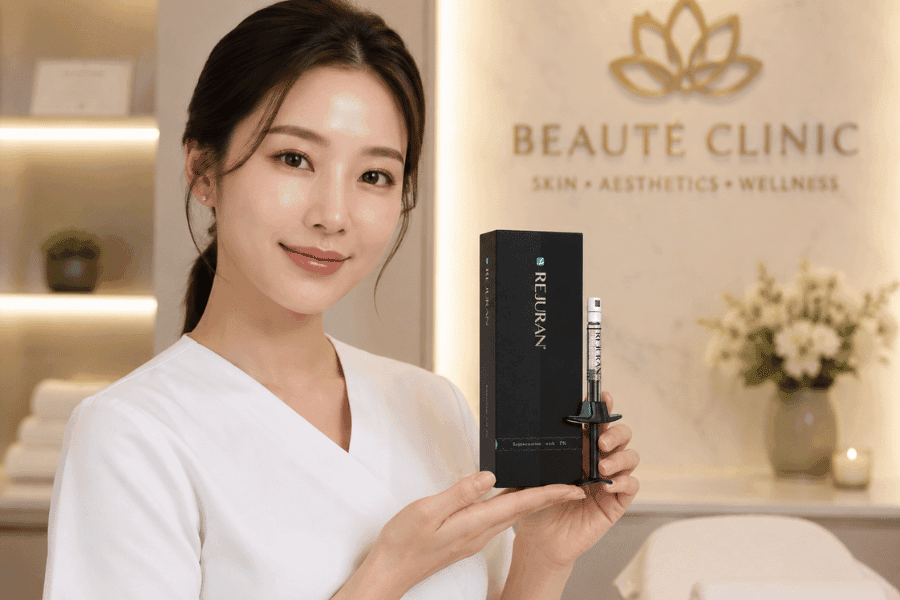
Rejuran HB Plus—The Best Match due to its dual action of deep hydration and regenerative effects.
PDRN in Your 40s
Supporting Visible Signs of Aging

By the forties, skin aging often becomes more apparent. Patients may notice fine lines becoming deeper, reduced elasticity, increased dryness, thinning skin, and slower healing. This is where regenerative enhancements are needed to combat visible aging and skin laxity, along with a few other minimally invasive anti-aging procedures. Also at this stage, PDRN is often used as part of a broader anti-aging strategy, as it provides deeper structural remodeling than hyaluronic acid alone.
Benefits in Your 40s
PDRN may help the skin:
Improve skin texture
Support collagen remodeling
Enhance hydration
Improve skin density
Promote healthier skin function
Many practitioners combine PDRN with other treatments such as skin boosters, radiofrequency procedures, or laser treatments for more comprehensive rejuvenation.
PDRN in Your 50s and Beyond
Is It Too Late to Start?

Absolutely not! Although preventive treatment offers advantages, PDRN can still provide meaningful benefits later in life. As skin aging progresses, regenerative support becomes increasingly important.
Common Concerns After 50
Significant collagen loss
Reduced elasticity
Thinner skin
Slower tissue repair
Visible aging changes
How PDRN Helps
PDRN may support:
Tissue regeneration
Improved skin quality
Enhanced hydration
Better elasticity
Recovery after aesthetic procedures
While results may develop more gradually than in younger patients, many individuals in their fifties and sixties still experience noticeable improvements.
Skin Condition Matters More Than Age

Although age provides a useful guideline, skin condition is often more important than chronological age. Two individuals of the same age may have dramatically different skin health depending on factors such as the following:
Genetics
Sun exposure
Smoking history
Diet
Stress levels
Skincare habits
For example, a 28-year-old with extensive sun damage may benefit from PDRN sooner than a 38-year-old who has maintained excellent skin health.
This is why personalized consultations are essential when determining treatment timing. So, who should consider starting PDRN earlier? Certain individuals may benefit from beginning regenerative treatments at a younger age. These include people with:
High Sun Exposure
UV damage accelerates collagen breakdown and skin aging.
Acne Scars
PDRN supports skin repair and collagen remodeling.
Frequent Aesthetic Procedures
PDRN may help support recovery and healing.
Dry or Sensitive Skin
Regenerative treatments can help strengthen skin function.
Early Signs of Aging
Fine lines and reduced elasticity may respond well to preventive interventions.
How Often Should You Get PDRN Treatments?
Treatment frequency depends on age, skin condition, and goals. Many practitioners recommend an initial treatment series consisting of three to four sessions spaced two to four weeks apart. Maintenance sessions may then be performed every few months. Patients using PDRN primarily for prevention may require fewer treatments than those addressing more advanced skin concerns.
Combining PDRN With Other Treatments by Age
One reason PDRN has become so popular is its compatibility with other aesthetic procedures.
In Your 20s
Common combinations include:
Microneedling
Hydrating skin boosters
Chemical peels
In Your 30s
Patients often combine PDRN with:
Laser treatments
Skin boosters
Early preventive neurotoxin treatments
In Your 40s and Beyond
Comprehensive protocols may include:
Radiofrequency treatments
Advanced skin boosters
Polynucleotide therapies
Exosome treatments
These combinations can enhance overall rejuvenation outcomes.
Why Korean Aesthetic Clinics Recommend Early Regenerative Care
South Korean aesthetic medicine has long emphasized prevention rather than correction. Many Korean practitioners encourage patients to focus on maintaining healthy skin before advanced aging develops.
This philosophy explains why PDRN has become one of Korea's most popular treatments.
Rather than waiting for significant wrinkles or skin laxity to appear, patients often begin regenerative therapies earlier to support long-term skin health. The goal is not to chase aging after it occurs but to slow its progression by strengthening the skin's natural regenerative capabilities.
The Future of Preventive Skin Rejuvenation: Polydeoxyribonucleotide

The popularity of PDRN reflects a broader shift within aesthetic medicine. Patients increasingly prefer treatments that:
Improve skin health
Stimulate natural regeneration
Deliver subtle results
Support long-term maintenance
As regenerative technologies continue to evolve, preventive treatments are expected to become even more common. PDRN represents one of the most established and accessible options within this growing category.
So, what is the best age to start PDRN treatments?
The answer depends on your skin condition and aesthetic goals, but many practitioners agree that the late twenties to thirties represent an ideal time to begin preventive regenerative care. However, PDRN can provide benefits at virtually any age. Patients in their twenties may use it to support skin health and recovery, while individuals in their thirties, forties, fifties, and beyond may incorporate it into broader anti-aging strategies.
Rather than focusing on a specific age, it is more useful to think of PDRN as a tool for maintaining and improving skin health throughout life. By supporting tissue repair, collagen production, and cellular regeneration, PDRN helps create stronger, healthier, and more resilient skin regardless of when treatment begins.
As regenerative aesthetics continues to shape the future of skincare, PDRN remains one of the most promising options for those seeking long-term skin rejuvenation and preventive anti-aging care.